Why bother with a tension swatch (called a tension swatch in the UK and a gauge swatch in the US)? Because it’s the single most important step for getting a finished knit (or crochet) project that actually fits – or is the correct size. Everyone works with slightly different tension, even when using the same yarn and needles or hook, so relying on the pattern alone can lead to garments that turn out too big, too small, or the wrong shape. Knitting or crocheting a tension or gauge swatch lets you check how many stitches and rows you’re getting over a set measurement and adjust your needle or hook size before you commit hours of work on a project.
It may feel like an extra step, but spending a small amount of time on a tension swatch (or gauge swatch) can save you yarn, frustration, and the disappointment of a project that doesn’t turn out as intended.
Why Tension Matters
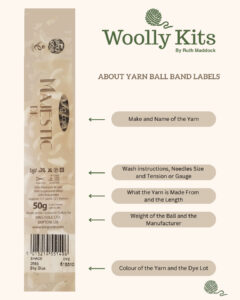
- Each pattern designer starts their pattern writing with a tension/gauge swatch – or square. This is usually worked over the stitch pattern, (i.e., a lace, textured or coloured pattern) but can also be worked over a basic stitch such as stocking stitch. (The tension/gauge given on the ball band label of the yarn you are going to use will always be worked over stocking stitch).
From this initial tension swatch all the calculations regarding the size, fit and shaping are then worked out. It’s quite a mathematical process.
If you are making a garment you will need to make sure that you are able to knit to the same tension given in the pattern then your finished garment will be the correct size.
What could Possibly Go Wrong?
- Yarn Utilization: if your tension i different then the yarn quantities stated in the pattern may be affected and you could run out of yarn or have too much left over.
- Texture and Appearance: Tension plays a significant role in the texture of your knit fabric. If your stitches are too big and loose the fabric will be more floppy, but if they are too small and tight the fabric will be stiff, less pliable and could even appear shrunken. A consistent tension enhances the visual appeal of your knitting.
- Ease of Knitting: Knitting with the correct tension makes the process easier and more enjoyable. Loose stitches can be frustrating to work with, leading to uneven tension throughout your project. On the other hand, overly tight stitches can strain your hands and slow down your progress.
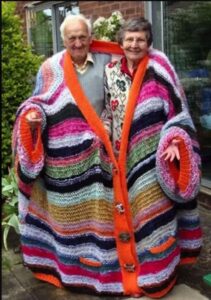
- The Garment Size: there is nothing more disappointing than working on a project that doesn’t fit.
- Even a non garment project such as a cushion cover, or bag needs to be worked to the correct tension.
Tips for Achieving the Right Tension
- How to work the tension swatch: Before diving into your project, take the time to create a tension swatch (gauge swatch).
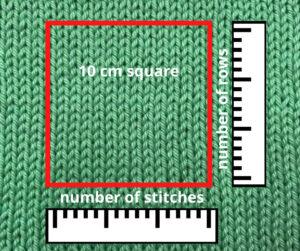
If the tension given by the designer is worked over the stitch pattern – you will need to replicate this in order to measure your tension correctly. Once worked you will need to measure the correct number of rows and stitches to see if they are the same as the designer’s given tension/gauge. If you have too many stitches or rows you will have to decrease your needle size if you have too few stitches or rows you will have to increase your needle size.
- Needle or Hook Selection: The pattern will always suggest a needle size but this can, and should, be altered in order to achieve the correct tension. For instance – some people know that they always knit tight, so they always increase needle size accordingly before starting their swatch. If you change the main needle size then you should also change any other needles required.
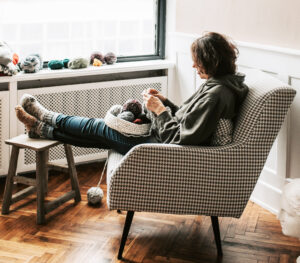
- Relaxation: Knitting is meant to be a relaxing hobby – so make sure that you are sitting comfortably and are relaxed when knitting. Every knitter has their own tension (like a fingerprint) but if you find that yours is not relaxing make a conscious effort to change it until you have a better way of knitting. As you gain experience, your tension will become more consistent. Embrace the learning process and enjoy the journey.
- Check-In Regularly: While working on your project, periodically check your tension to ensure it remains consistent. This is especially important if you’re a new knitter or are knitting a large piece that spans multiple sessions. Catching any tension issues early will save you from major adjustments later on.
- Avoid uneven stitches: by always ending at the end of a row – not halfway through.
The Joy of the Perfect Tension
If you stick to these simple rules, then your finished garment should fit perfectly. However, most knitters just want to get knitting and many ignore the tension/gauge swatch entirely. If you do ignore this then you absolutely must measure the garment after a few inches to make sure the width and length is going to be correct. For instance: if you start by knitting the back of a sweater after a few inches or centimetres, lay the work down and measure the width to make sure that it is going to fit correctly. (You can use an existing sweater that fits well to get your measurements.)
Beginners work often has very uneven stitches because they have not settled into a consistent tension/gauge.
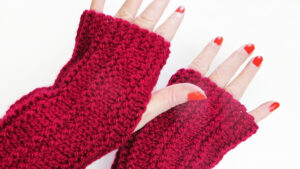
Ff you are a beginner, I suggest that you start with a few simple home items such as pillows and cushions, little bags – or my Easy Peasy Fingerless Gloves – available as a kit or a pattern. These will not need to have a specific fit and are often satisfyingly quick to finish. The knitting practice gained from this will help to get your work flowing evenly.
Above all make sure that you enjoy your knitting!